



Howdy, Wealth Writers🤠
You think your article content stands on its own. If the writing’s good enough, you catch attention eventually.
But your potential reader never sees your writing first, they just see your headline, sitting shoulder to shoulder with 22 other newsletter mails, crowding up in their inbox.
The real fight for attention happens in the inbox where your headline tries not to get stumped over by the 25 others, like it’s a Travis Scott concert.
Today, we make sure you are prepared for your next inbox battle with a strong-shouldered headline that’s impossible to ignore! :D
I brought in Vinayak Ramesh , who’s spent years studying what actually makes a headline impossible to scroll past, and together we’re handing you the exact frameworks you can copy-paste for killer headlines. :)
What you'll learn in this article:
✓ The 3 things every headline has to nail in under two seconds
✓ All 10 proven headline formats you can steal for your next article
✓ The built-in Substack feature that tests two headlines for you and auto-sends the winner to your whole list
✓ How to keep your headline built for opens while still ranking in search, with one setting most creators never touch
Let's goo! 🤠

3 Things Every Good Substack Headline Does At Once
A great headline gets a reader to understand 3 things at the exact same time, without giving away the answer:
1. What the article is about
2. Who it's for (Your Target Persona)
3. The promise: what problem gets solved, or what they walk away with
Take a headline like “How To Write Better.” It doesn't tell a Substack Newbie what it's about, who it's for, or what they get out of it, so nobody clicks.
Now compare it to something like “The 3-Step System That Took My Substack Headlines From Ignored To Impossible To Skip.” Same topic, but now it answers the what, the who (Substack writers), and the promise.
Answer 1 of the 3 questions and your headline is weak.
Answer 2 and it's good.
Answer all 3 and readers can't help but click.
The Anatomy Of A Headline People Can't Scroll Past
Every scroll-stopping headline breaks into the same working parts. Take something like “The 1 Mistake That's Killing Your Substack Open Rates (And How To Fix It In 10 Minutes).”
The hook word:
The first 2-3 words matter most, cause that's all a reader actually looks at while scrolling. “The 1” works cause it signals a low barrier to entry, just one thing, not ten.
The WHO:
“Your Substack Open Rates” tells the reader exactly who this is for, anyone running a newsletter and watching their numbers.
The promise:
“Killing Your Open Rates (And How To Fix It In 10 Minutes)” is the emotional payoff, it names the pain and the fix in the same breath.
If a reader can't tell what, who, and what's in it for them from the first 8-10 words, you've already lost them.
The 10 Formats Working On Substack Right Now (Vinayak)
Okay, Timo just gave you the basic 3-step anatomy of every headline. It’s the foundation for a good headline. But to turn a “good” headline into a “great” headline, there are 10 specific formats you can use to pimp them up.
1. Big numbers
“I analyzed 16,000 articles to find AI writing on Substack”
Karen Spinner, Wondering About AI
“I Built a Runaway Subscribe Button. It Brought 70 New Subscribers in 6 Days. Code + Challenge Inside.”
Karo (Product with Attitude), Product with Attitude
Both could have been written without the numbers. Karen could’ve said she studied AI writing, and Karo could’ve said her weird button got more subscribers. Technically true. Also much easier to scroll past.
2. Dollar signs
“Part 1: 20 freelancers tell us how much money they make ($145K–$510K)”
Grace Abbott, How To Go Freelance
“I Spent $50K Launching a Book. Here’s What Actually Worked.”
Money does half the work before you even understand the rest of the sentence. Grace gives you a range across 20 freelancers, while Morgan basically says, “Yes, I really spent $50K on this. Here’s what happened.” Hard not to be a little nosy.
3. Credible names
“How Lenny Rachitsky Built a 1.2M Subscriber Empire from the Depths of Burnout”
Riza, The Solopreneur Drafts
“Five Justin Welsh Lessons For Substack”
The Creative Life, from Jim Croft
Lenny and Justin are doing some of the work here before Riza and Jim even start explaining the article. But the name has to belong there. Randomly putting Alex Hormozi in a headline because he exists is probably not the lesson.
4. This just happened
“Substack’s new AI detector Pangram said my AI-assisted post is 100% human”
Yana G.Y., Unplugged by Yana G.Y.
“ChatGPT Images 2.0 Is Out. These 7 Prompts Are All Substackers Need.”
AI Meets Girlboss, from Pinkie
These headlines have an expiry date, which is kind of the point. A new AI detector appears, a new image model drops, and the article gives you a reason to read now instead of saving it for the mythical weekend when you clear your reading list.
5. The success story
“My tiny writing biz will do $315,000 this year (feel free to copy how I did it)”
Taylin John Simmonds, The Creative Minority
“How I Built a Paid Substack Tier That Earns $40K+ a Year (Steal My Strategy!)”
Olivia Wickstrom, Petal + Hearth
Taylin gives you the business number. Olivia gives you the recurring-revenue number. In both cases, you know the result before you click. You’re clicking for the story and the process behind it.
6. Things that shouldn’t go together
“I Stopped Trying to Grow My Subscriber Count, Then My Revenue Increased By 940%”
Mack Collier, Backstage Pass
“Stop Emailing Your List. Start Talking To A Friend [Email Marketing That Actually Works]”
Veronica Llorca-Smith 🍋, The Lemon Tree Mindset
Mack’s headline basically says he stopped chasing growth and made way more money. Veronica tells email marketers to stop emailing. Both make your brain go, “Hang on, what?” That buys the second look.
7. For the industry / call out the exact reader
“Why Creating and Selling Digital Products Is Still the Highest-Leverage Move for Solopreneurs in 2026 (and What Actually Worked for Me in 2025)”
Anfernee, Solopreneur Code
“Stop Selling Time. Start Owning the Hill.”
Anfernee literally says solopreneurs. Tomasz is talking to people running agencies and service businesses. You don’t have to make everyone curious if the right person instantly knows the post is for them.
8. The topic within the topic
“How The Paywall Works on Substack (And When to Use It)”
Jess, The Creator, Unstuck to Published
“I Analysed 140 LinkedIn Profiles of Consultants Generating Consistent Inbound Leads. 121 of Them Were Doing Less Than You Are.”
Melanie Goodman, The Link Tank
Jess doesn’t write “how to make money on Substack”; she zooms into one very specific thing: where the paywall goes and when to use it. Melanie does the same with LinkedIn, but narrows it to consultants trying to get inbound leads. Smaller question, much clearer reason to click.
9. Question / answer
“I make good money. Why do I still feel like this?”
Hanna Horvath, Your Brain on Money
“What Nobody Tells Us About ‘Passive Income’”
Landon Poburan, Landon’s Letters
Hanna actually asks the question out loud. Landon phrases it as “what nobody tells us,” which is basically a question wearing a different shirt. Either way, you open because you want the missing answer.
10. X number
“I Stopped Hitting Claude Usage Limits - 10 Workflow Changes That Actually Helps”
Dheeraj Sharma, GenAI Unplugged
“25 Niche Digital Product Ideas From Skills You Already Have”
Elham, Digital Skills to Income
Dheeraj promises 10 workflow changes. Elham promises 25 ideas. There’s no mystery about how much you’re getting, which is probably why list headlines refuse to die no matter how many times the internet declares them dead.
What I noticed after looking through all of these
The funny thing is, the strongest headlines usually weren’t using only one format. Taylin’s is a success story and a dollar-sign headline. Yana’s is timely and contradictory. Melanie’s uses big numbers while also drilling into a very specific topic.
So I probably wouldn’t sit there trying to make Framework #4 fit perfectly. The useful part is having a few different ways to attack the same boring first draft.
You Don’t Have To Pick Just One Headline (Timo🤠)
All 10 formats Vinayak just showed you work, it’s just about matching the format to your content, and mixing two or three together when it fits.
Now you have options, and you don’t have to (and you shouldn’t) lock yourself into a single headline format.
Substack has a title A/B testing feature built right into the platform.
Write up to 4 headlines using different formats, then tell Substack to test which ones get the best open rate. After the test Substack sends the winner to the rest of your list automatically.
In almost 60% of Substack’s own tests, the winning headline wasn’t the one the writer originally picked. Test it instead of guessing.
One catch, title testing only unlocks once you’ve got 200+ subscribers, and it only works from the web editor, not the app.
How to find the feature👇
“But I want my headline to be SEO optimized😫”
You don’t have to choose. Substack lets you set an SEO title completely separate from the headline your subscribers actually see.
Your headline’s only job is to win the inbox, curiosity, not keywords.
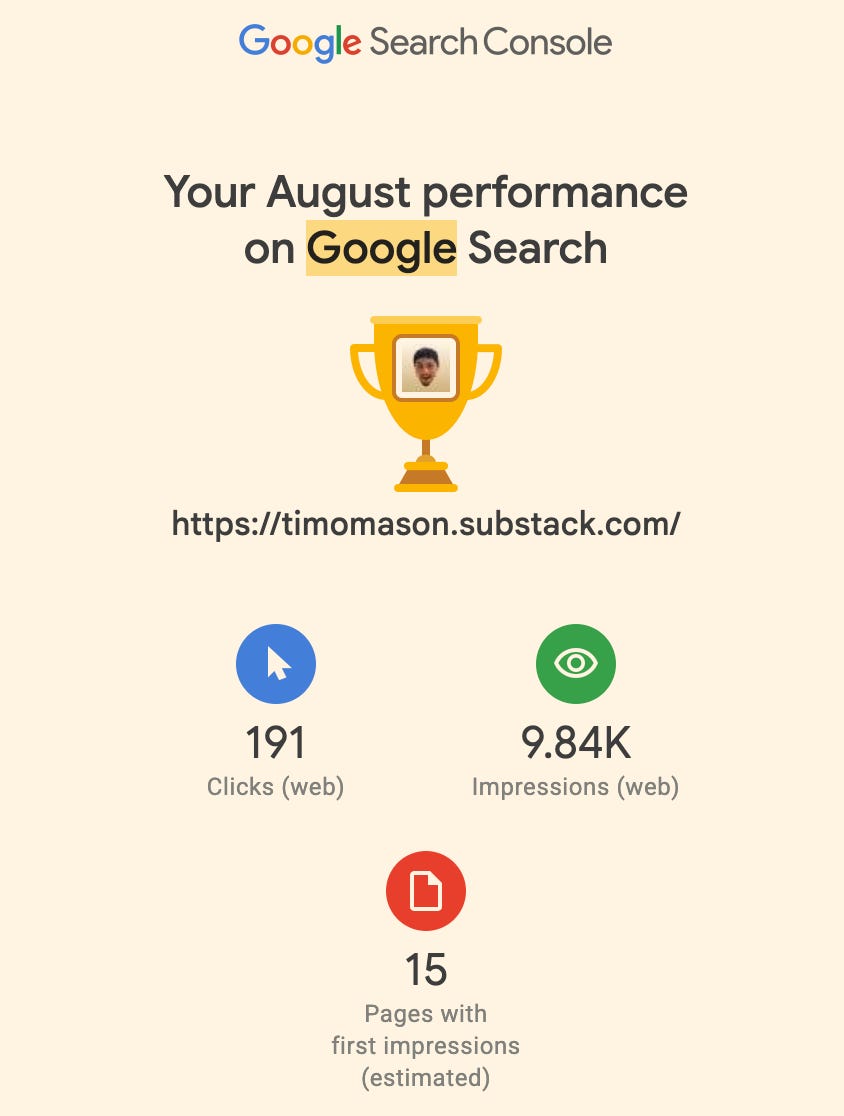
My headline “How I Got 352 Subs From One Substack Feature 99% Of Creators Ignore” pulls people in cause it sparks curiosity about which feature I talk about, but it doesn’t tell a search engine what the article topic is, which it should rank for.
So before I hit publish, I set a separate SEO title, that makes the article topic clear, mine was “Substack Recommendations: How To Get More Subscribers”.
This way the article stays optimized for open rate while still ranking in search, so that I can get SEO results like this.👇 :D
Write your headline for the inbox and your SEO title for the search bar.
How to find the feature👇
The Perfect Substack Headline Cheat Sheet
Cause reading this once won't make it stick, I put the full framework, the anatomy and all 10 formats, into one Notion cheat sheet you can duplicate and keep next to you every time you sit down to write a headline. (Free for every subscriber)
The Headline Hero Skill
Writing a strong headline isn’t a one-time task, it’s a weekly job. Every single article you publish needs one, which makes it one of the most foundational things you do as a Substack creator.
Now you can use the cheat sheet to spend the next few weeks memorizing every framework above, rewriting headlines by hand until your brain is spitting out hooking headlines left and right, and that’s a super valid way to do it. :D
But… if you’d rather be time and energy-efficient about it, you can just use the Headline Hero (works for ChatGPT & Claude).
It’s trained on every framework and format you just learned, and it automatically generates headlines based on exactly what we covered today.
Paid subs see the Headline Hero here.
Upgrade now to get instant access.
That’s A Wrap
Thanks to Vinayak Ramesh to join me at this piece, make sure you check him out. :D
Subscribe now for weekly value bombs like the one you just read + FREE access to the 5-Day Substack Side-Hustle Sprint
See you next week, :)
Timo Mason🤠
Thanks so much for the shoutout!
The strongest takeaway for me wasn’t any single headline formula — it was the idea that the best headlines often combine two or three naturally.
A number creates specificity. A contradiction creates tension. A clear promise gives the click a reason.
The framework matters, but learning how to layer them without making the headline feel engineered is the real skill.
Really useful breakdown, Vinayak & Timo. 🌙