

How I Create Digital Product Funnels That Make 8,000+ Sales
Steal the problem-solution framework and 3 conversion optimizers that turn free subscribers into paying customers


Howdy, Wealth Writers🤠
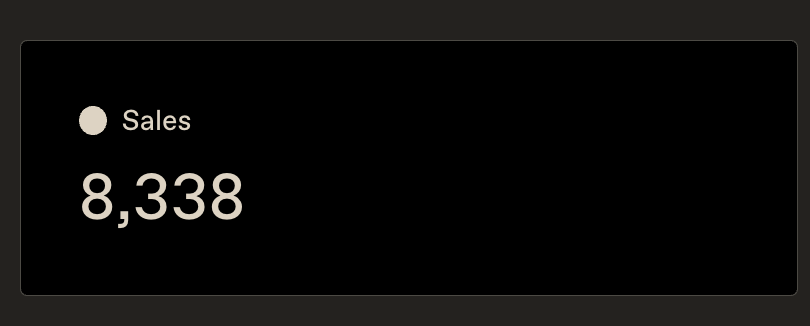
I’ve done over 8,000 Gumroad sales with my digital product funnels.
And it’s not just me, I plugged this same framework into the Substack businesses of my clients like David Roy , and it works for them too👇
So today I’m sharing the digital product funnel sauce with you! :D
How to orchestrate a funnel so people don't just grab your freebie and say “thanks, goodbye! :D”; they turn into paying customers through a $7 impulse purchase, and keep buying as you introduce higher-priced upsells down the line.
James Presbitero is joining me on this one too, he’s dropping an actionable copy-paste prompt at the end, so you can put each piece into action the moment you read it.
What you’ll learn in this article:
✓ The problem-solution framework that turns one freebie into an entire product line
✓ Why matching formats increase your digital product conversion rate big time
✓ How aligned branding creates one smooth digital product ecosystem
✓ The exact price point I use for every first paid product, and why
✓ Why this framework works to scale into “big money” territory
Let’s goo! 🤠

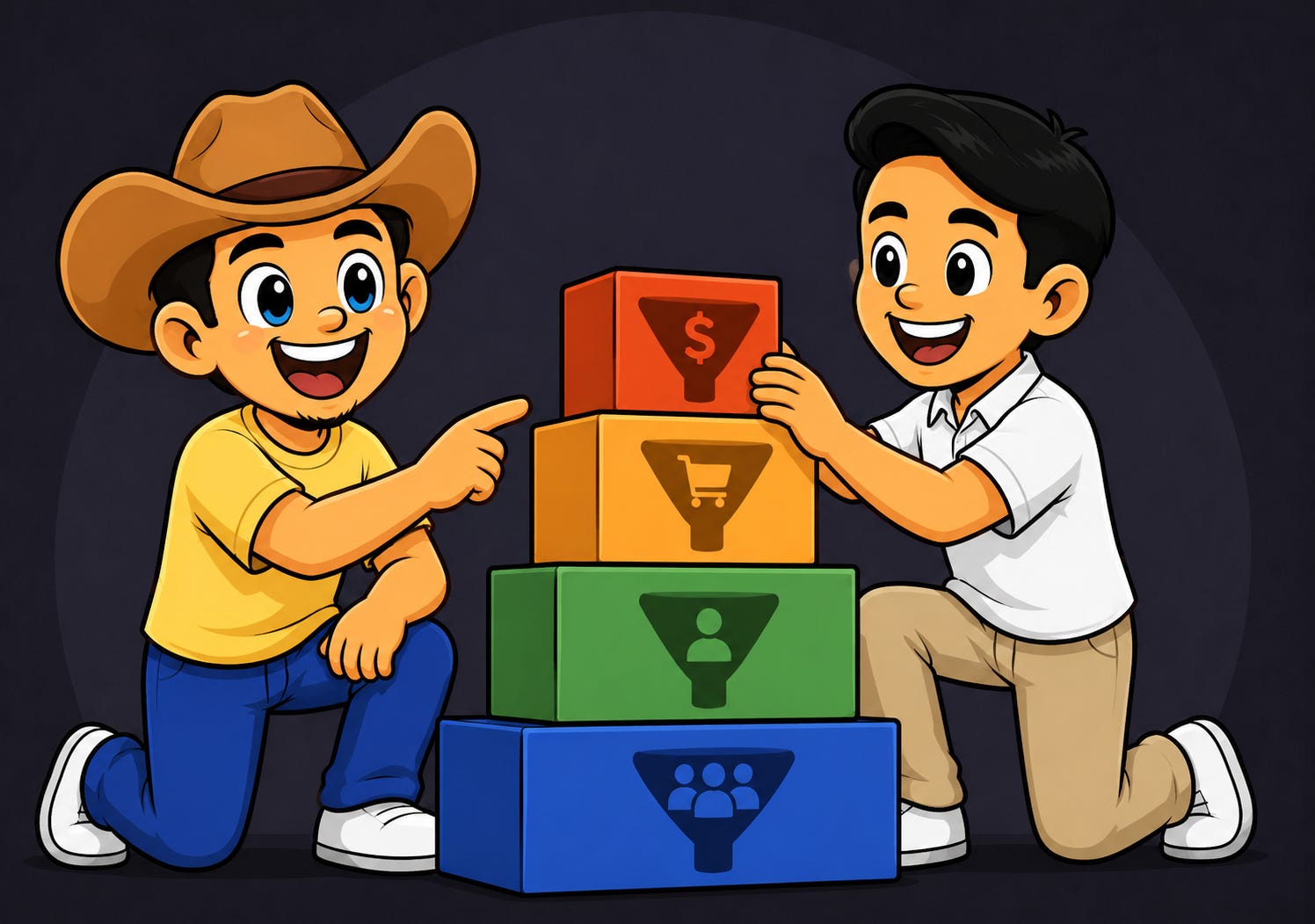
The “Problem → Solution” Framework
Your Target Persona has a problem, you hand them the solution in your freebie, and solving that first problem automatically creates the next one. Your low-ticket product is the solution to that next problem.
Problem → solution → problem → solution…
My example:
I built a free GPT that helps people ideate viral content, it worked well, people used it, and it solved their problem of having no ideas.
But solving that ideation problem created a new one immediately. They now had to write the actual content.
So I put a viral content writing tool directly in front of them right after, and it converted really well. :)
This “Problem → Solution” Framework is your foundation for a successful digital product funnel, but to maximize the conversion rate, there are 3 optimizations you should have in place…
The 3 Conversion Optimizers
Optimizer 1: Match the Format
Once you know the problem-solution chain, the first optimization lever is format.
If your freebie is a GPT and someone downloaded it, you can safely assume they're comfortable working inside tools like that, they're willing to open ChatGPT and use a prompt.
Now imagine your upsell is a vibe-coded app instead. Even if it's basically a ChatGPT wrapper under the hood, that mismatch can turn people off, they took the freebie cause they're a ChatGPT person, not cause they wanted to learn a new app.
Example
GPT freebie → GPT upsell.
Text-based course freebie → text-based course upsell.
Whatever the format is, keep it consistent and just make the paid version more valuable at solving the next problem.
Optimizer 2: Match the Branding
Your two products are related, so the branding needs to say that out loud.
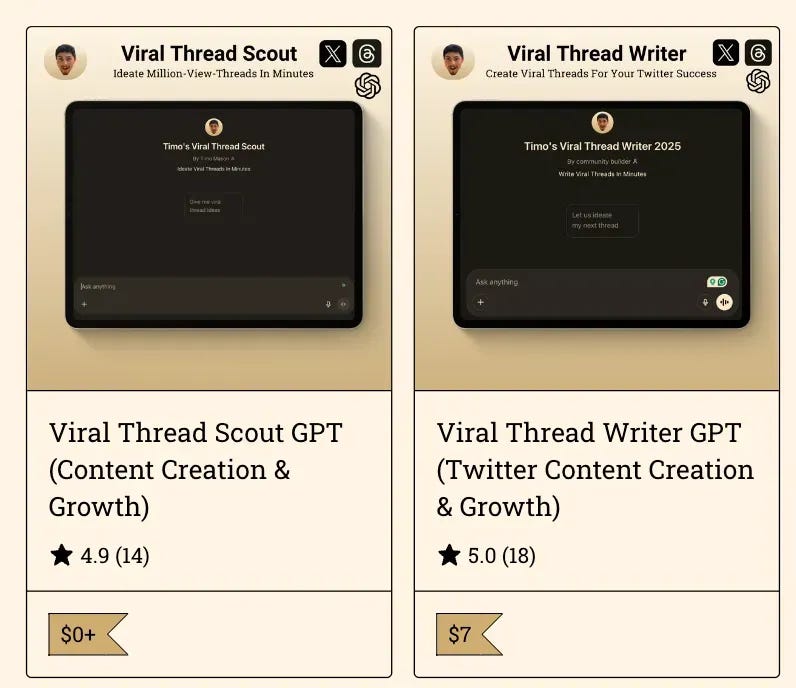
The name should share a structure, and the visuals should feel like they belong to the same family. If the visual identity is completely different, the connection feels off even if the reader can't say why.
If you're building related products, make their branding related
Optimizer 3: Get the Price Right
The logic here is simple: too expensive and nobody buys.
I published a multi-month long case study, where I tested out all types of levers to increase my digital product conversion, and at the end I came to this exact “Don’t price to high” conclusion and 8X’ed my conversion rate in the process.
Read the full case study here
There's no universal right number, it depends on your niche and the actual value the product delivers. But this is a spontaneous purchase, so it can't be expensive.
I personally always go with $7 for the first paid product of the funnel.
I'm not trying to get rich off that $7 sale, I'm turning a reader into an actual customer.
I don't know if I invented this phrase or if Alex Hormozi said something like that :) but it goes:
You don't get rich from the upsell, you get rich from the upsell of the upsell, (the future, higher-priced product that comes after the $7 offer)
This Framework Doesn't Stop at $7
The problem-solution loop you just used to go from freebie to $7 product works exactly the same way for your next upsell too.
Your $7 product solves the problem your freebie created. But solving that problem creates a new one, and that new problem is exactly what your next upsell (at a even higher price point) should solve.
You can use the same framework and same 3 optimizers from today to build out your funnel more & more.
Freebie → $7 product → $50 product → TO infinity and beyond! :D
The Digital Product Funnel Prompts
Ideating the digital product funnel with the “problem → solution” framework is the highest-leverage task to put into action from this article.
It’s a “Build once, get sales on autopilot” kinda thing.
But ideating the funnel from scratch is a pain in the ass, so here’s a prompt that saves you time and energy, cause it creates the funnel for you:
Right here, paid subs see the Digital Product Funnel Prompt. Upgrade to get access to the prompt and many more paid subs benefits👇
Should YOU actually solve the next problem? (JAMES)
Timo’s prompt just gave you an upsell funnel idea, with the next most-likely problems your customer will encounter.
Now, to turn “a funnel” into “YOUR funnel, we have to check how much personal expertise you can add in there, so it's not a cheap & copyable product that could be from any creator.
The judgment test prompt
What it does: takes the surviving directions/ideas and scores them based on how much of your expertise the product can absorb. A product that only needs public information stays cheap and copyable. A product that needs your judgment is the one worth owning.
1. KEY RULE
Two products can solve the same problem and only one of them is hard to copy. The difference is how much of my judgment the product has to carry to work. Score for that, nothing else.
2. ROLE
You are a competitor with money and a chat window. You want to rebuild my product after buying it. You are scoring how hard I am about to make that for you.

3. TASK
Ask me for my product funnel ideas (from Timo's prompt) and a short description of my background.

For each product , answer:
- What would this product have to decide for the buyer in order to be useful?
- How many of those decisions could you make correctly using only public information?
- How many need something only I would know from doing this work for years?
- If you bought this product, how long would rebuilding it take you?

Then rank the candidates from most copyable to least, and say which one you would least like to compete with.

4. SPECIFICS
- Judge the product, not the topic. A common problem can still need uncommon judgment.
- Name the specific decisions. "It needs expertise" is not an answer.
- If a candidate needs no judgment from me at all, say so plainly.
  That one belongs in the freebie.
- Do not rank by market size, demand, or profit. Only by how hard it is to rebuild.

5. TOOLS
My product ideas, my background, and the evidence sweep output if I have it.
Your Action Plan
1. Freebie audit:
Look at your current freebie and name the exact problem it solves.
2. Next problem:
Identify the problem that shows up right after someone solves the first one.
3. Format match:
Build your low-ticket product in the same format as your freebie.
4. Branding check:
Align the name and visuals so the two products read as one family.
5. Price:
Set your first paid product at $7 cause you're aiming to turn readers into customers, not aiming to get rich in one sale.
6. Setup:
Use THE Gumroad Game Plan to launch it.
Next Steps
Now that you know how to ideate your digital product funnel, the next question arises…
How do I set up this digital infrastructure in practice?
The answer is THE Gumroad Gameplan: Speed-Run To Your First $1K.
In this masterclass, you learn everything you need to know to set up digital product funnels inside Gumroad, and much more. :)
If you are still in the process of ideating/creating a freebie, read my blueprint on the most straightforward way to create a digital product as a Substack creator through packaging the articles you already wrote.
You already have a freebie created but have issues figuring out how to deliver & promote it actively as a Substack creator?
THIS Article, is exactly what you are looking for. :)
Anyways, big thanks to James Presbitero for providing us with the prompt. If you don’t have enough of his AI Aura, yet go check his publication out here. :)
Subscribe now for weekly value bombs like the one you just read + FREE access to the 5-Day Substack Side-Hustle Sprint
See you next week, :)
Timo Mason🤠
 | A guest post by
|
Really practical breakdown, love seeing real numbers behind digital product strategies like this.